
Our Pedagogy

The Montessori method at the service of the child

The method

Montessori pedagogy

Maria Montessori (1870-1952) was an Italian physician and educator, and the first woman to earn a medical doctorate in Italy. After decades spent observing children, she built a method that radically changed how we think about education - centred on respecting each child's natural development, and on growing their autonomy, self-confidence and capacity to reason.

Shelf of coloured beads, Montessori mathematics material

Maria Montessori

1870 - 1952

Framework

The four planes
of development.

Maria Montessori identified four great stages in the construction of a human being, from birth to the age of 24. Each stage has its own characteristics, needs, and adapted environment. This is the framework that organises the whole school.

01

0 - 6 years

Early childhood

The absorbent mind. Construction of the individual, the senses, language, movement, identity.

Children's Community · Children's House

02

6 - 12 years

Late childhood

Imagination and reason. The child seeks causes, great stories, justice. Social construction begins.

Elementary

03

12 - 18 years

Adolescence

Construction of social and moral identity. The adolescent looks for usefulness, belonging, vocation.

Middle School (Sept 2026) · High School to come

04

18 - 24 years

Maturity

Specialisation, contribution to society, full intellectual autonomy.

Beyond the school

"The greatest sign of success for a teacher is to be able to say: the children are now working as if I did not exist."

Maria Montessori
The five principles

Core principles

Mixed ages
01

Mixed ages

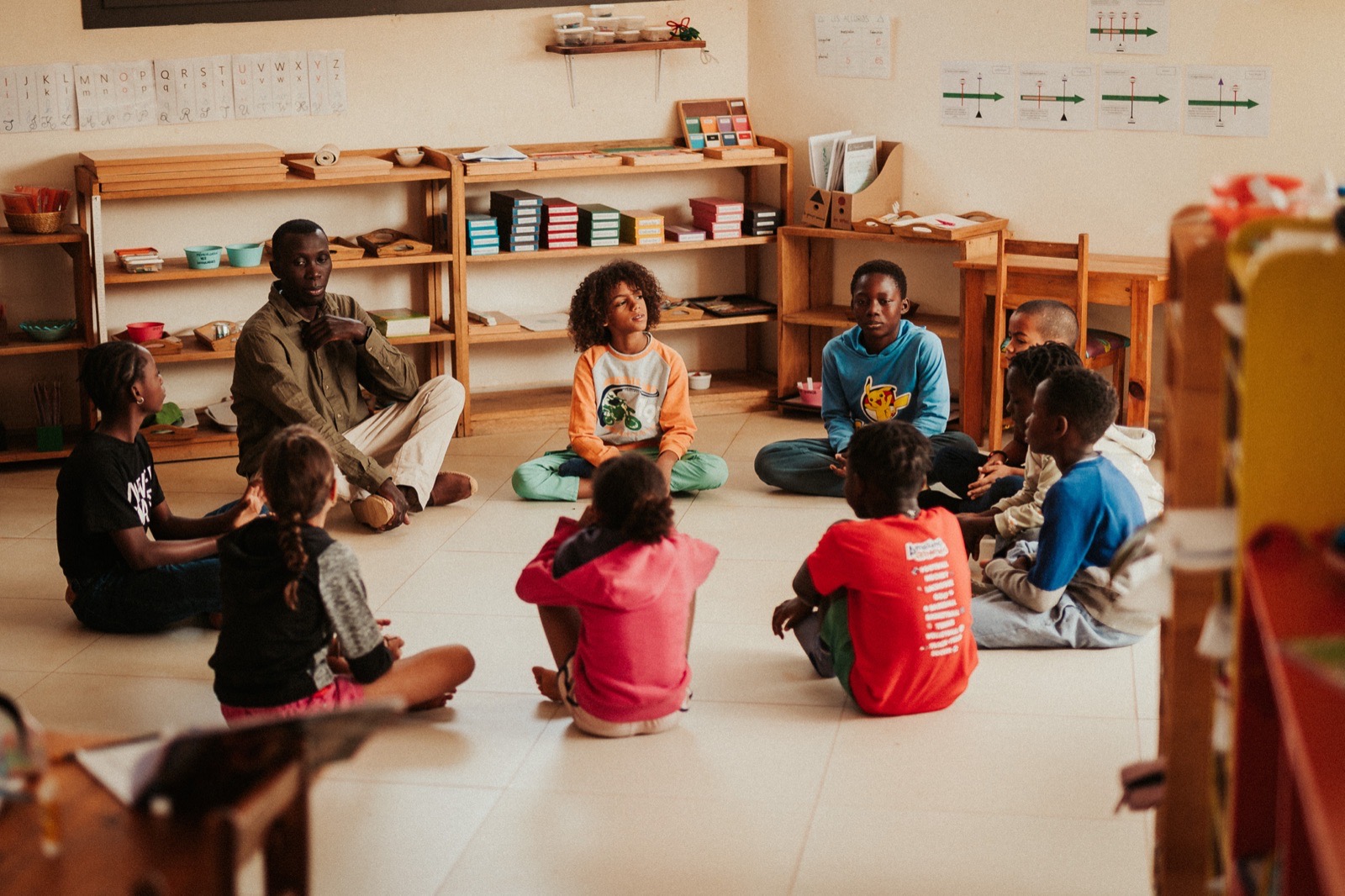
In a Montessori class, children of different ages learn side by side. The mix builds mutual help and respect. Older children share what they know with younger ones - and in teaching, they cement their own learning. The younger children, in turn, are pulled forward by the example of those just ahead of them.
A prepared environment
02

A prepared environment

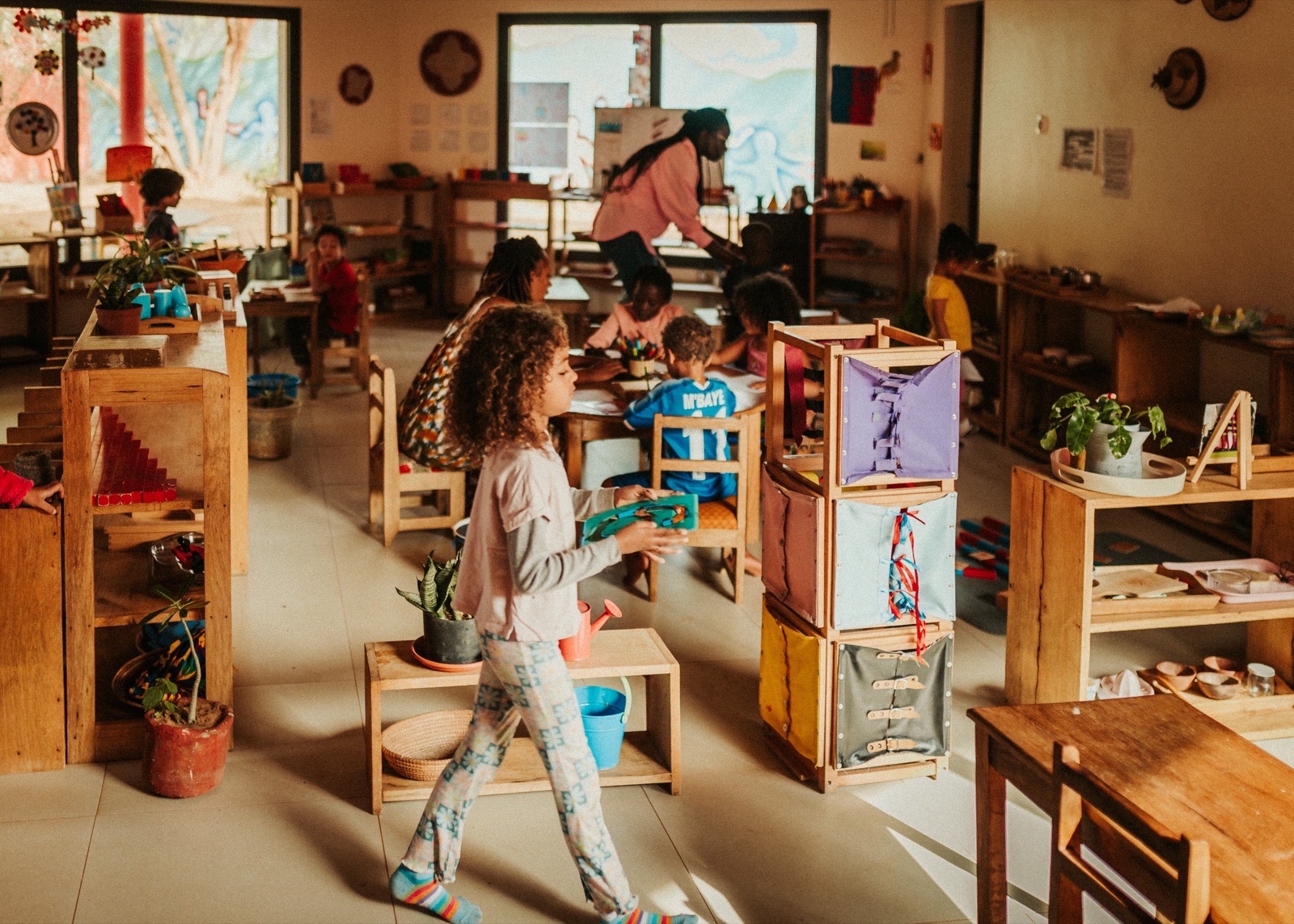
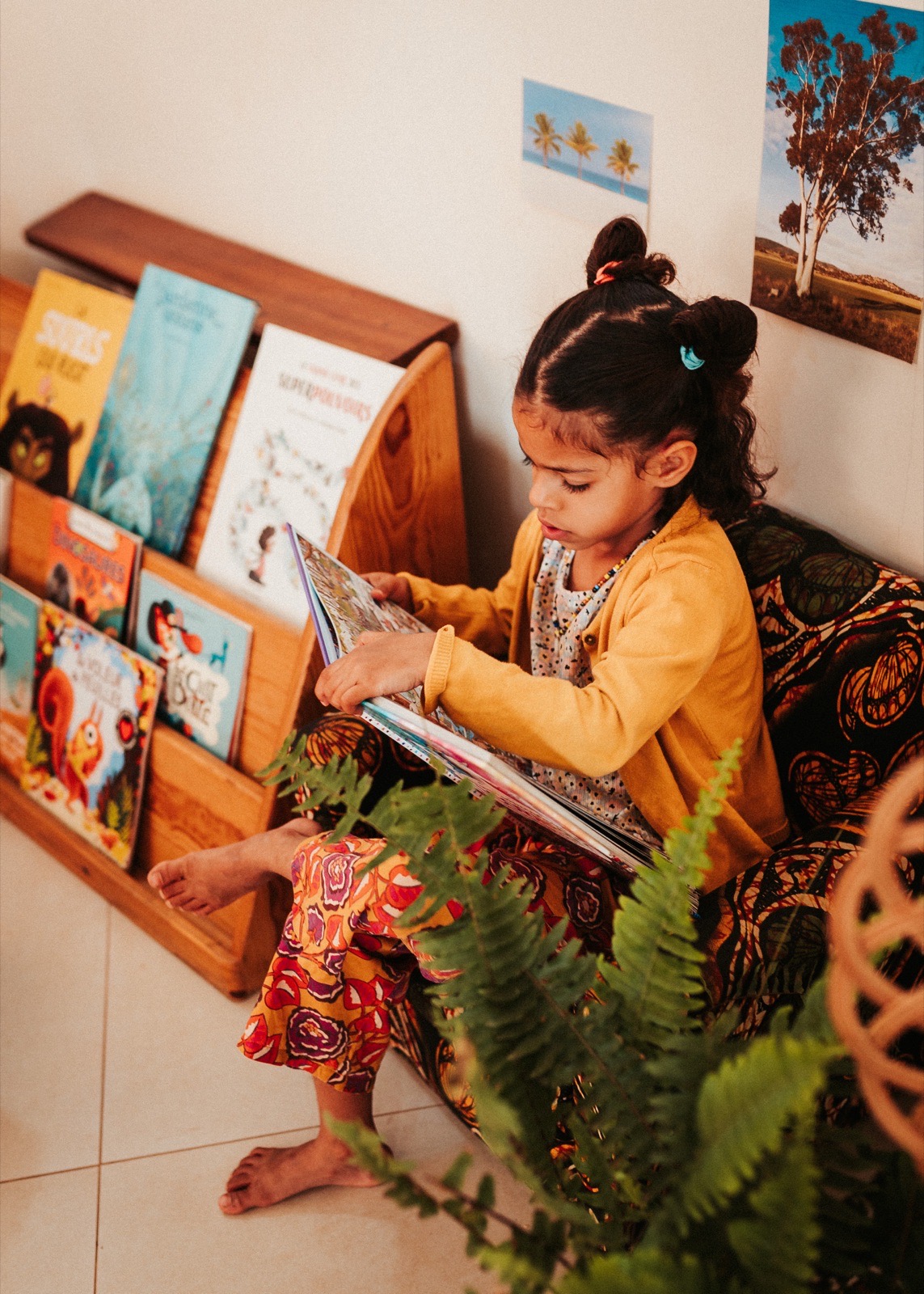
The classroom is carefully designed so each child can grow into their full potential. Built to their size and strength, calm and stimulating at once, it invites spontaneous, focused, independent work.

03

Independent activity

Each child freely chooses an activity from those that have been presented to them - and works at their own pace. There's only one of each material in the room, which builds patience and respect for others. Children work for the satisfaction of understanding, not for a grade.

Independent activity
Self-correcting materials
04

Self-correcting materials

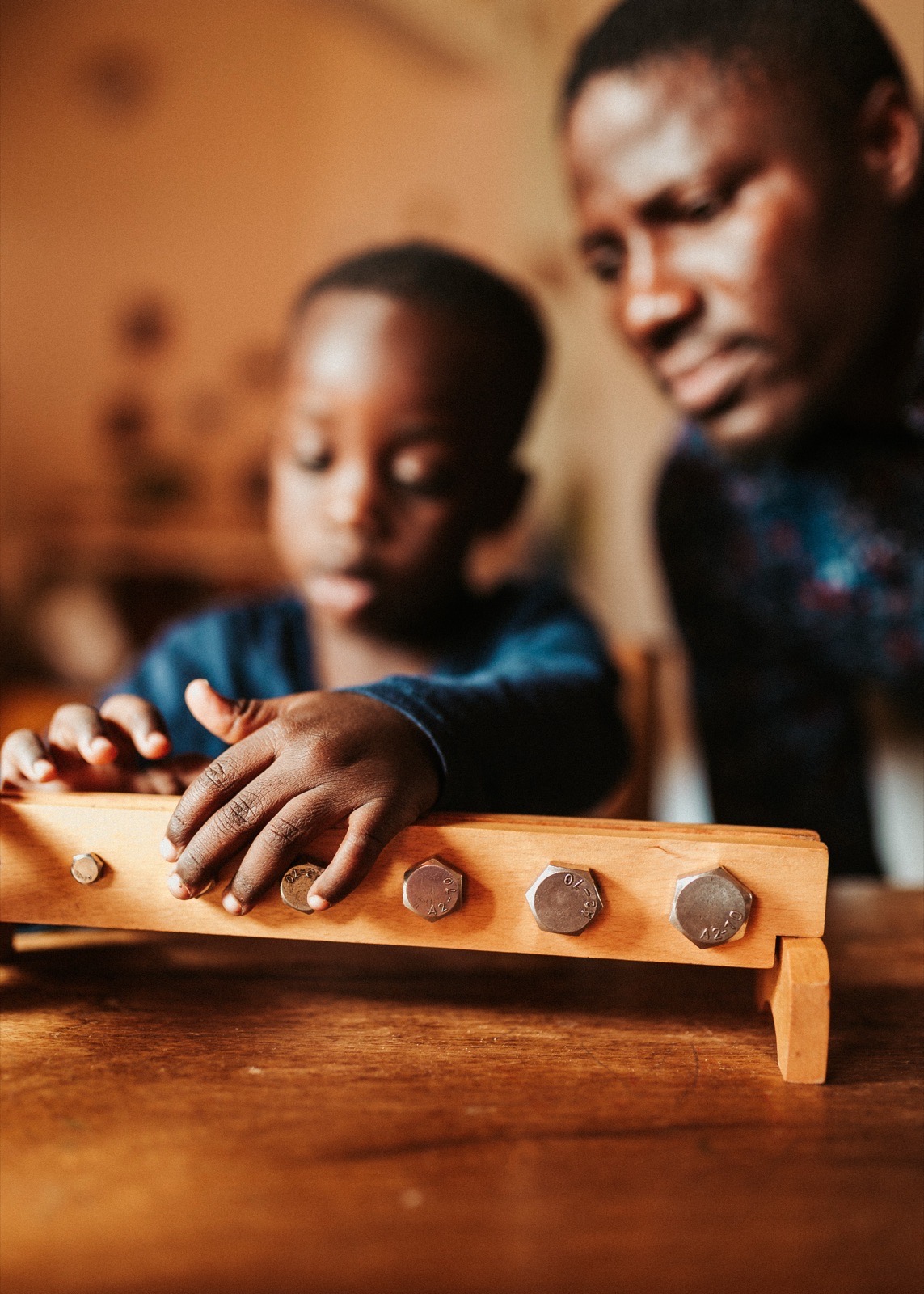
Montessori materials are designed so the child spots and fixes their own mistakes - no adult correction needed. That builds concentration, perseverance and critical thinking. No one judges the result: only the child knows if they got there.

05

The educator

The Montessori educator is a trained, attentive guide. They watch carefully and step in lightly - preparing the environment, presenting activities at the right moment, then letting the child explore on their own. They respect the sensitive periods of each child's development.

The educator
Montessori vocabulary

Key concepts.

A few foundational ideas you will hear our team mention.

0 - 6 years

Absorbent mind

Before the age of six, a child absorbs their environment like a sponge - without effort, without conscious filtering. Everything around them leaves a deep, lasting imprint on who they become.

throughout development

Sensitive periods

Temporary windows during which a child is irresistibly drawn to a specific skill: language, order, movement, small objects, numbers, social life.

the Montessori moment

Polarisation of attention

When a child finds the activity that matches their inner need, they enter a state of deep concentration that transforms them. They emerge calm, satisfied, more themselves.

autonomy

Self-correction

Montessori materials carry within them the answer to the mistake. The child judges their own work, without needing the adult's gaze. Confidence is built in silence.

Next

Discover our environments

Three environments adapted to each age group, from 18 months to 12 years.

The Environments